Skip to content
AWS Community Day East Canada

← Back to home & agenda

Program & speakers

Session abstracts and speaker biographies.

09:15 · 45 min

Keynote

About this session

Session abstract coming soon.

Speaker

Aaron Hunter

Aaron Hunter

Keynote

Bio coming soon.

10:10 · 45 min

Engineering a Robust Text-to-SQL AI Agent

About this session

Natural-language interfaces to databases promise self-serve analytics, but production Text-to-SQL agents fail loudly when schemas drift, questions are ambiguous, or SQL must be safe and auditable. This session focuses on engineering patterns that make Text-to-SQL agents more reliable: grounding in schema and business semantics, validation and guardrails before execution, observability for bad generations, and iterative evaluation so teams can ship with confidence on AWS.

Speaker

Michael Yang

Michael Yang

CTO

Tech 42 Consulting

Bio coming soon.

11:05 · 45 min

AI: Threat, Tool, or Transformation Partner?

About this session

Artificial Intelligence (AI) stands at a pivotal point in global technological evolution, simultaneously perceived as a threat, a tool, and a transformation partner. As a threat, AI raises legitimate concerns around automation-driven job displacement, ethical risks, bias amplification, and the erosion of human agency in critical decision systems. As a tool, it enables unprecedented operational efficiency, analytical capability, and productivity through data-driven insights and automation of complex cognitive tasks. Most critically, as a transformation partner, AI represents a co-evolutionary force reshaping business models, empowering human creativity, and redefining the nature of work and leadership. This triadic lens underscores the importance of governance, transparency, and strategic collaboration to ensure that AI's transformative potential aligns with human values and institutional resilience. The future of AI integration will be determined not by the technology alone, but by how thoughtfully societies balance these dimensions in pursuit of trusted, human-centric innovation.

Key takeaways

  • AI must be understood through three simultaneous roles — threat, tool, and transformation partner — not in isolation, but as an interconnected dynamic.
  • As a threat, AI introduces real risks: deskilling, job displacement, embedded bias, ethical concerns, and reduced human control in decision-making systems.
  • As a tool, AI significantly boosts efficiency, decision quality, and productivity by augmenting human capabilities with data-driven automation.
  • The most strategic lens is AI as a transformation partner, where it reshapes business models, redefines leadership, and enhances — not replaces — human creativity.

Speaker

Garima Bajpai

Garima Bajpai

Building DevOps Community of Practice in Canada

Garima builds the DevOps community of practice in Canada. She is founder of the DevOps Meetup community of practice in Canada, co-organizer of DevOps Summit Canada, DevOps Ambassador with the DevOps Institute and the Continuous Delivery Foundation, board member at Capital Carbon Consulting, WCT–FCT mentor for Women in Leadership in ICT (Canada chapter, 2020), and nominee for Women in IT of the Year — Young Leader (WIT Award).

13:00 · 45 min

Before You Rebuild Your RAG Stack: 7 Ways to Improve Answer Quality on AWS

About this session

When RAG systems fail, the first instinct is often to blame the model. In practice, weak answers are usually caused by poor evidence flow: the wrong chunks are retrieved, the question is interpreted too narrowly, or the final context is too thin to support a useful response.

This session breaks down seven practical ways to improve RAG answer quality in an AWS-native architecture before reaching for fine-tuning or a full rebuild. Using a real-world transcript-grounded assistant as the case study, I will cover chunking strategy, metadata design, query rewriting, multi-query retrieval, reranking, synthetic summary chunks, and citation mapping.

The focus is not on flashy demos. It is on the architectural decisions that make RAG systems more accurate, more explainable, and easier to debug in production. Attendees will leave with a practical framework for diagnosing weak RAG behavior and improving quality using AWS-native services and patterns.

Key takeaways

  • How to diagnose whether weak RAG answers are retrieval problems, context assembly problems, or generation problems.
  • How to improve answer quality using chunking, metadata, query rewrite, multi-query retrieval, reranking, and citation-aware context design.
  • How to think about production-minded RAG systems on AWS with a stronger focus on trust, observability, and grounded responses.

Speaker

Cyril Bandolo

Cyril Bandolo

Senior AI Solutions Architect | AWS Machine Learning Hero | AWS Serverless, GenAI, and MLOps

SLS Guru

Senior Serverless Developer at SLS Guru. Cyril Bandolo is an AWS Machine Learning Hero and Senior AI Solutions Architect with 7+ years of experience designing and delivering AWS-native AI/ML and event-driven cloud systems across aviation, telecom, and consulting. His work spans Bedrock, SageMaker, Lambda, Step Functions, CDK, RAG architectures, and secure production GenAI patterns. Cyril is also the founder of AWS User Group London Ontario and shares practical cloud and AI content through talks, writing, and community education.

13:55 · 45 min

In defense of MCPs

About this session

Everyone's saying MCPs are dead and you should just use bash. They're not wrong, about 80% of the time. But what about the other 20%?

This talk makes the honest case for when MCPs are still the right answer: SaaS integrations with no CLI, enterprise security boundaries, dynamic tool discovery, and structured communication that doesn't require parsing stdout with regex. We'll cover practical lessons for building MCP servers that actually work well with LLMs: keeping tool counts low, designing around outcomes instead of endpoints, and writing error messages that let agents self-correct.

Then we flip it around. If you're on team "just use bash," your CLI better be designed for agents, not just humans. We'll walk through what makes a CLI agent-ready: structured JSON output, meaningful exit codes, JMESPath filtering, dry-run modes, and shipping the prompt alongside the binary.

Speaker

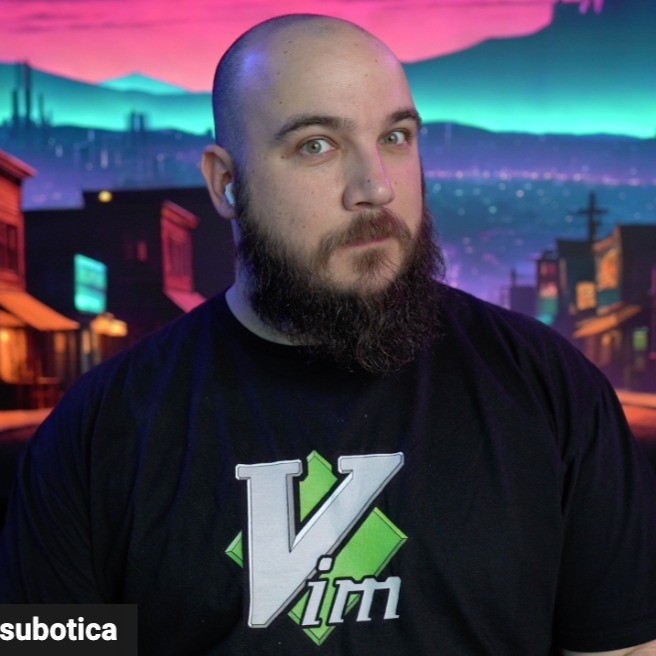
Darko Mesaros

Darko Mesaros

Principal Developer Advocate

Amazon Web Services

As a Principal Developer Advocate at AWS, I leverage my 10+ years of experience in system administration, engineering, and DevOps to help customers and developers adopt and use AWS services and solutions. I am passionate about cloud computing, automation, and innovation, and I enjoy sharing my knowledge and insights through various channels, such as blogs, webinars, podcasts, and events. My core competencies include AWS, cloud, Windows, Linux, virtualization, Windows Server Services, Active Directory, VMWare, Hyper-V, File Services, Backup Solutions, SCCM, PowerShell, Bash, Citrix XenApp, Xen Server, Solaris, Veritas Storage, Chef, Ansible, Jenkins, CI/CD, and DevOps. I hold multiple certifications from Microsoft and AWS, such as MCITP, MCSA, and AWS Solutions Architect - Associate. I am also fluent in English, Serbian, and (almost) Hungarian, and I have an EU citizenship. My mission is to empower developers and customers with the best tools and practices to build and run scalable, reliable, and secure applications on the cloud. Oh yeah, I also collect old computers, software and technology!

14:50 · 45 min

Scaling GenAI on AWS: Turning POCs into Production Systems

About this session

Building a multi-agent AI system is the easy part. Running it in production is where the real lessons begin. In this session, we share hard-won insights from building a six-agent AI assistant for a fashion retailer, on AWS Bedrock AgentCore. We'll walk through the architecture decisions that worked and the ones that surprised us. Whether you're designing your first multi-agent system or scaling one to production, this session gives you a practical framework for making it work — and a clear-eyed view of what can go wrong.

Key takeaways

  • What is the most impactful architectural decision in a multi-agent system.
  • Key to model selection to cut latency and cost significantly without sacrificing accuracy.
  • How to prevent prompt drift.
  • What are the production caveats and six failure modes most teams hit.
  • Observability is not optional — dashboards and alerts to build before you go live.

Speaker

Rupal Bhatt

Rupal Bhatt

Scaling GenAI on AWS: Turning POCs into Production Systems

DoiT

Rupal Bhatt is a GenAI and cloud strategist with focus on driving measurable ROI from AI adoption. As an AWS-certified professional holding a Specialty-level credential for Machine Learning, Data Analytics and Databases, she combines a strong technical foundation with real-world experience supporting fast-moving startups and innovation-driven teams. Rupal has led AI and data initiatives that streamline operations, accelerate product development, and unlock new business value. At DoiT, Rupal has partnered with dozens of customers to scope, prototype, and operationalize GenAI use cases. Her recent work spans fintech risk and analytics, healthcare workflow automation, and marketing technology recommendations—helping companies translate experiments into production-ready systems.

15:45 · 45 min

Pick your own journey in the AWS Community

About this session

The AWS Community has a place for every builder. Whether you like creating content, organizing tech events, or just showing up to learn. Pick your level of commitment, choose what excites you (events, content, code), and jump in wherever feels right. Your community, your adventure.

Key takeaways

  • Rather than listing AWS community programs, this talk shares different community journeys: a leader who built a community around their local User Group, a content creator who went from one blog post to a main stage, an attendee who found a job, or the sponsor who hired them. It shows that there are many paths into the AWS Community. Whether someone volunteers for a single event, writes one article, or simply shows up as an engaged attendee, there is a role for everyone and a journey waiting to start.

Speaker

Maria Encinar

Maria Encinar

Leading the AWS User Group program globally

Amazon Web Services

Maria leads the AWS User Group Global Program as part of the Developer Experience team at Amazon Web Services. Prior to leading the developer community team at PagoNxt/Banco Santander, she worked at Google as a community specialist. A community nerd with 14+ years of experience leading and working with communities, Maria cherishes the intersection of technology and communities where she helps build environments for people to learn, collaborate and grow.